You have it: the height-adjustable desk. But let's be honest – how often do you really raise it? Most users make the mistake of standing for too long at a time until their feet hurt, and then end up sitting again out of frustration.
The key to more energy in the home office is not standing itself, but the change. Here is your plan for a sit-stand rhythm that you can actually stick to.
⚡️ The Golden Ratio (60-30-10 Rule):
- 60 minutes of dynamic sitting.
- 30 minutes of active standing.
- 10 minutes of moving around (a short walk to the coffee machine).
1. Why "standing all day" is just as harmful as "sitting all day"
Standing for three hours at a time puts massive strain on your joints and veins. The goal of a sit-stand desk is to regularly break the static posture of your body. As soon as you notice that you are only shifting your weight onto one leg, it is time to change positions.
2. The perfect moments to switch
Link raising your desk to fixed anchors in your day. This will make the movement automatic:
- Meetings & calls: As soon as you click the Zoom or Teams link -> raise the desk. Standing makes your voice sound firmer and you come across as more present.
- Email batching: Routine tasks can be done excellently while standing.
- After lunch: The best weapon against the post-lunch slump. Standing helps you digest better and stay awake.
3. Ergonomics check: Finding the right height
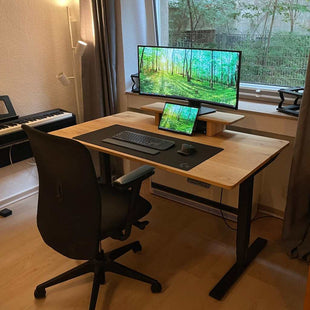
Whether sitting or standing – the geometry must be right. Your shoulders should be relaxed and your forearms resting loosely at a 90° angle on your oak tabletop.
Pro tip: Wear flat, comfortable shoes in the home office or work barefoot on an anti-fatigue mat. This additionally relieves your back during standing phases.
4. Listen to your body, not the clock
Every day is different. If your legs feel heavy, keep sitting. If you notice that you are "slumping" in front of the monitor, raise the desk. The goal is dynamic working. Your Deskolonia desk is your partner that adapts to your energy level – not the other way around.
FAQ – Frequently asked questions about the sit-stand concept
How long should I stand for at most at a time?
We recommend a maximum of 20 to 40 minutes at a time. After that, you should either walk around briefly or sit down again for a while.
Will standing give me varicose veins?
Only if you stand as stiff as a statue. Make sure never to lock your knees and to occasionally shift your weight lightly from one foot to the other.
Which desk is best for switching quickly?
A model with electric height adjustment and a memory function is ideal. This allows you to save your perfect sitting and standing heights and switch in seconds at the touch of a button.
Conclusion: Your body loves variety
A sit-stand rhythm is not a workout, but a treat for your back and your focus. Start small: Two standing phases in the morning, two in the afternoon. You will notice how your energy level remains stable in the February gray.
Find your perfect setup for dynamic working now: